The rapid advancement of digital technology has transformed the way individuals, businesses, and governments operate. Innovations such as cloud computing, artificial intelligence, big data, and the Internet of Things have created new opportunities for efficiency and connectivity. However, these developments have also introduced complex cybersecurity challenges. As digital systems become more interconnected, the risk of cyber threats and data breaches continues to grow.
Cybersecurity refers to the practice of protecting computer systems, networks, and data from unauthorized access, attacks, or damage. In the modern technological landscape, cyber threats are becoming increasingly sophisticated. Cybercriminals now use advanced tools, automation, and social engineering techniques to exploit vulnerabilities in digital infrastructures.
Understanding the challenges of cybersecurity in the era of advanced technology is essential for organizations and individuals who rely on digital systems for communication, business operations, and data storage.
Increasing Complexity of Digital Infrastructure
Modern digital systems are far more complex than traditional computing environments. Organizations now rely on interconnected networks, cloud services, mobile devices, and remote access platforms to manage their operations. While this interconnected infrastructure increases efficiency, it also creates multiple entry points that attackers can exploit.
Each device, application, or system connected to a network represents a potential vulnerability if not properly secured. Managing security across such a wide range of technologies requires advanced monitoring tools and highly skilled cybersecurity professionals.
The complexity of modern infrastructure also makes it challenging to detect threats quickly. Cyber attackers may exploit hidden vulnerabilities in software or network configurations before security teams even become aware of them.
Rise of Sophisticated Cyber Attacks
Cyber threats have evolved significantly in recent years. Traditional forms of cybercrime, such as basic malware or phishing emails, have developed into highly sophisticated attacks that use automation and advanced hacking techniques.
Cybercriminal groups often conduct carefully planned attacks targeting specific organizations or industries. These attacks may involve ransomware, data theft, or disruption of critical systems. In many cases, attackers spend weeks or months studying their targets before launching an attack.
The increasing sophistication of cyber threats requires organizations to adopt proactive security strategies. This includes continuous monitoring, threat intelligence analysis, and advanced security technologies capable of detecting unusual behavior within networks.
Data Privacy and Protection Concerns
Data has become one of the most valuable assets in the digital economy. Businesses collect large amounts of information about customers, employees, and operations. While this data can improve decision-making and innovation, it also creates serious privacy and security risks.
Cybercriminals often target sensitive data such as financial records, personal information, and intellectual property. When data breaches occur, they can cause significant financial losses and damage an organization’s reputation.
Protecting data requires strong encryption, secure storage practices, and strict access controls. Organizations must also comply with data protection regulations that require responsible handling and protection of personal information.
Security Risks of Cloud Computing
Cloud computing has become a fundamental component of modern digital infrastructure. Many organizations rely on cloud services to store data, run applications, and manage business operations. While cloud platforms provide flexibility and scalability, they also introduce unique cybersecurity challenges.
One major concern is misconfiguration of cloud services. If cloud settings are not properly configured, sensitive data may become publicly accessible or vulnerable to cyber attacks. Additionally, organizations must trust cloud service providers to maintain strong security measures.
Shared responsibility models in cloud computing mean that both providers and users must actively manage security. Businesses must implement proper authentication systems, encryption methods, and monitoring tools to protect their cloud environments.
Internet of Things (IoT) Security Challenges
The Internet of Things refers to networks of connected devices such as smart home appliances, wearable devices, industrial sensors, and smart city infrastructure. These devices collect and exchange data through the internet, creating new possibilities for automation and efficiency.
However, many IoT devices have limited processing power and may lack strong security features. Weak authentication systems, outdated software, and poor security design can make these devices vulnerable to cyber attacks.
Once compromised, IoT devices can be used as entry points into larger networks or as part of large-scale cyber attacks. Securing IoT ecosystems requires stronger device authentication, regular software updates, and improved network monitoring.
Human Error and Social Engineering
Despite technological advancements, human behavior remains one of the most significant cybersecurity vulnerabilities. Cyber attackers often exploit human psychology through social engineering techniques such as phishing, impersonation, or manipulation.
Employees may unknowingly provide sensitive information or click on malicious links that allow attackers to gain access to secure systems. In many cases, a single mistake by a user can compromise an entire network.
Organizations must invest in cybersecurity awareness and training programs to help employees recognize potential threats. Educating users about safe digital practices is an essential component of a comprehensive security strategy.
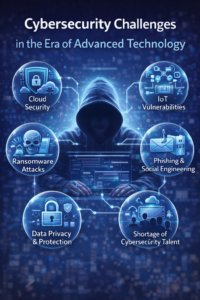
Shortage of Skilled Cybersecurity Professionals
As cyber threats continue to grow, there is an increasing demand for skilled cybersecurity experts. However, many organizations struggle to find qualified professionals who can manage complex security systems and respond to emerging threats.
The shortage of cybersecurity talent can leave organizations vulnerable to attacks. Without experienced professionals to monitor systems and respond quickly to incidents, security breaches may go undetected for extended periods.
To address this challenge, educational institutions and organizations are investing in cybersecurity training programs and certifications. Developing a skilled workforce is essential for maintaining strong digital defenses.
Emerging Technologies and New Security Risks
Technological innovation continues to introduce new cybersecurity challenges. Technologies such as artificial intelligence, machine learning, blockchain, and advanced automation are transforming industries but also creating new attack surfaces.
For example, cybercriminals may use artificial intelligence to automate attacks, analyze vulnerabilities, or create highly convincing phishing messages. At the same time, defenders are using AI-powered tools to detect threats and respond to attacks more efficiently.
As new technologies continue to evolve, cybersecurity strategies must adapt accordingly. Continuous research, innovation, and collaboration between governments, businesses, and security experts are necessary to stay ahead of emerging threats.
Strengthening Cybersecurity Strategies
To address the growing cybersecurity challenges, organizations must adopt comprehensive and proactive security strategies. This involves combining advanced technology, strong policies, and skilled personnel to create multiple layers of defense.
Effective cybersecurity strategies include regular risk assessments, network monitoring, secure authentication systems, data encryption, and incident response planning. Businesses should also implement zero-trust security models that require continuous verification of users and devices.
Collaboration between organizations, cybersecurity experts, and government agencies also plays an important role in sharing threat intelligence and improving overall security.
Conclusion
The era of advanced technology has brought tremendous opportunities for innovation, connectivity, and digital transformation. However, it has also created complex cybersecurity challenges that require careful attention and strategic planning.
As cyber threats become more sophisticated, organizations must strengthen their security systems, educate their employees, and invest in advanced technologies that detect and prevent attacks. Protecting digital infrastructure is not only a technical challenge but also a critical component of modern business operations and global security.
By adopting proactive cybersecurity practices and staying informed about emerging threats, individuals and organizations can better protect their data, systems, and digital assets in an increasingly connected world.