Virtual Reality (VR) and Augmented Reality (AR) are rapidly transforming the way people interact with digital technology. These immersive technologies are no longer limited to gaming or entertainment; they are increasingly being used in industries such as education, healthcare, business, manufacturing, and retail. By combining digital elements with real-world environments or creating entirely virtual worlds, VR and AR are opening new possibilities for innovation and user engagement.
In recent years, advancements in computing power, artificial intelligence, sensors, and graphics technology have accelerated the development of VR and AR systems. As these technologies continue to evolve, they are expected to reshape how individuals work, learn, communicate, and experience digital content. Businesses and researchers are investing heavily in immersive technology to develop solutions that improve productivity, training, and customer experiences.
Understanding the future potential of VR and AR requires examining their current applications, emerging trends, and the technological advancements driving their growth.
Understanding Virtual Reality and Augmented Reality
Virtual Reality and Augmented Reality are often discussed together, but they function in different ways. Virtual Reality creates a fully immersive digital environment where users interact with computer-generated worlds using specialized headsets and motion sensors. This technology allows individuals to explore simulated environments that feel realistic and interactive.
Augmented Reality, on the other hand, overlays digital information or graphics onto the real-world environment. Instead of replacing reality, AR enhances it by adding virtual objects, text, or animations that users can view through smartphones, tablets, or AR glasses. This combination of digital and physical environments creates interactive experiences that blend technology with everyday life.
Both VR and AR rely on technologies such as computer vision, spatial tracking, and advanced graphics rendering. These systems allow devices to understand physical spaces and respond to user movements, making the interaction more natural and immersive.
The Role of VR and AR in Education and Training
One of the most promising applications of VR and AR is in education and professional training. Traditional learning methods often rely on textbooks, lectures, and static visuals, which may not fully engage learners. Immersive technologies allow students to experience complex concepts through interactive simulations and virtual environments.
For example, medical students can practice surgical procedures in a virtual environment without risk to real patients. Similarly, engineering students can explore 3D models of machines or structures to better understand how they function. This hands-on learning approach improves comprehension and retention of information.
In corporate environments, VR and AR are used to train employees in areas such as safety procedures, equipment operation, and customer service. These immersive training systems allow individuals to practice real-world scenarios in a controlled digital environment, reducing risks and improving skill development.
Transforming Healthcare Through Immersive Technology
Healthcare is another sector benefiting significantly from VR and AR innovation. These technologies are being used to assist in medical training, patient treatment, and surgical planning. VR simulations enable medical professionals to rehearse complex procedures before performing them in real life, improving precision and reducing potential complications.
Augmented Reality is also helping surgeons visualize critical medical data during operations. AR systems can overlay patient imaging data directly onto the surgical field, providing doctors with real-time guidance. This enhances accuracy and helps medical teams make informed decisions during procedures.
Beyond surgery, VR has shown promise in therapeutic treatments such as pain management, physical rehabilitation, and mental health therapy. Patients can use immersive experiences to reduce stress, manage anxiety, and improve recovery outcomes.
Enhancing Business and Industrial Innovation
Businesses across various industries are adopting VR and AR technologies to improve productivity and innovation. In manufacturing and engineering, immersive tools allow designers and engineers to visualize products in three-dimensional space before they are physically produced.
This virtual prototyping process helps companies identify design flaws, reduce development costs, and accelerate production timelines. AR systems also assist technicians and maintenance workers by displaying digital instructions or diagrams directly on equipment.
In the workplace, virtual collaboration platforms allow teams located in different parts of the world to interact within shared digital environments. These platforms create realistic meeting spaces where participants can view 3D models, presentations, and interactive content together.
Revolutionizing Retail and Customer Experiences
Retail businesses are increasingly using AR technology to improve the customer shopping experience. Augmented reality applications allow consumers to visualize products in their real environment before making a purchase decision. For example, customers can preview how furniture might look in their homes or see how clothing and accessories may appear on them.
This interactive shopping experience reduces uncertainty and helps customers make more informed choices. Retailers also benefit from reduced product returns and improved customer satisfaction.
Virtual Reality is also being used to create immersive brand experiences. Companies can develop virtual showrooms or product demonstrations that allow customers to explore products in a highly engaging digital environment.
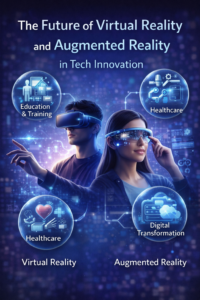
The Integration of Artificial Intelligence and Immersive Technologies
Artificial Intelligence (AI) is playing an increasingly important role in enhancing VR and AR systems. AI technologies help these systems analyze user behavior, recognize objects, and adapt virtual environments based on real-time interactions.
For example, AI-powered computer vision allows AR devices to recognize objects and surfaces in the real world. This capability improves the accuracy of digital overlays and ensures that virtual elements interact naturally with the physical environment.
In VR environments, AI can create intelligent virtual characters and dynamic simulations that respond to user actions. These advanced features make immersive experiences more realistic and interactive, increasing their effectiveness in training, entertainment, and education.
Challenges and Limitations of VR and AR Technologies
Despite their potential, VR and AR technologies still face several challenges that must be addressed before widespread adoption becomes possible. One of the main limitations is the cost of advanced hardware such as high-performance headsets and motion-tracking systems.
User comfort is another important factor. Extended use of VR headsets may cause motion sickness or eye strain for some individuals. Researchers and developers are working to improve display technologies, reduce device weight, and enhance ergonomic design.
Privacy and data security also present challenges. Many AR and VR systems collect large amounts of spatial and personal data to function effectively. Protecting this data is essential to ensure user trust and prevent misuse.
Future Trends and Opportunities in Immersive Technology
The future of VR and AR is expected to be shaped by advancements in hardware, connectivity, and software development. Improvements in display resolution, processing power, and battery efficiency will make immersive devices more comfortable and accessible.
The growth of high-speed networks such as 5G and advanced cloud computing systems will enable more complex and responsive VR and AR applications. These technologies allow large amounts of data to be processed quickly, enabling smoother and more interactive experiences.
In the coming years, immersive technologies may also play a central role in emerging digital ecosystems such as virtual workspaces and interconnected digital environments. As these innovations continue to develop, VR and AR are likely to become essential tools in both professional and personal contexts.
Conclusion
Virtual Reality and Augmented Reality are among the most transformative technologies shaping the future of digital innovation. By creating immersive environments and enhancing real-world experiences with digital information, these technologies are redefining how people interact with information, products, and services.
From education and healthcare to manufacturing and retail, VR and AR are enabling new levels of efficiency, creativity, and engagement. Although challenges related to cost, comfort, and data security remain, continuous technological advancements are gradually overcoming these barriers.
As research and development continue, VR and AR will likely become integral components of the modern technological landscape. Their ability to bridge the gap between the physical and digital worlds positions them as powerful tools for innovation, collaboration, and human progress in the years ahead.
Read more : whitesystemz.com