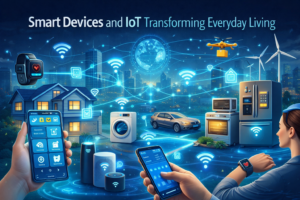
Technology has rapidly evolved over the past decade, and one of the most significant developments is the rise of smart devices and the Internet of Things (IoT). These technologies are reshaping how people interact with their homes, workplaces, and cities. IoT refers to a network of interconnected devices that communicate and exchange data through the internet. Smart devices such as connected appliances, wearable technology, smart speakers, and automated home systems are now part of everyday life for millions of people around the world.
The integration of IoT into daily routines is improving convenience, efficiency, and safety. From controlling home lighting through smartphones to monitoring health using wearable devices, IoT technology allows people to manage various aspects of their lives more effectively. As technology continues to advance, smart devices are expected to play an even greater role in shaping the future of everyday living.
Smart Homes and Automated Living
One of the most visible applications of IoT technology is the development of smart homes. Smart homes use internet-connected devices that allow homeowners to control lighting, heating, air conditioning, security systems, and household appliances remotely. These systems are usually managed through smartphone applications or voice assistants.
Automation makes everyday tasks easier and more efficient. For example, smart thermostats can learn user preferences and automatically adjust temperature settings to improve comfort and reduce energy consumption. Smart lighting systems can turn lights on or off based on schedules or motion detection. By integrating various devices into a single system, smart homes create a connected environment that simplifies daily living.
Wearable Technology and Personal Health Monitoring
Wearable devices have become increasingly popular as people seek better ways to monitor their health and fitness. Smartwatches and fitness trackers can measure physical activity, heart rate, sleep patterns, and even stress levels. These devices collect valuable health data that can help individuals make better lifestyle decisions.
Many wearable devices also connect with smartphone applications that provide insights and recommendations based on collected data. This technology encourages users to stay active, maintain healthier habits, and monitor potential health issues early. The integration of IoT in healthcare through wearable technology has significantly improved personal health awareness and preventive care.
Smart Appliances Improving Household Efficiency
Modern households are increasingly equipped with smart appliances designed to simplify daily chores. Smart refrigerators can monitor food inventory, suggest recipes, and alert users when items are running low. Smart washing machines allow users to control washing cycles remotely through mobile applications.
These appliances are designed to save time and energy by optimizing their performance based on user behavior. For instance, some smart appliances can schedule operations during off-peak electricity hours to reduce energy costs. By making household management more efficient, smart appliances contribute to a more convenient and sustainable lifestyle.
Smart Security Systems Enhancing Safety
Safety is a major concern for homeowners, and IoT-based security systems provide advanced protection solutions. Smart security cameras, doorbell cameras, motion sensors, and smart locks allow homeowners to monitor their property in real time from anywhere in the world.
These systems send instant notifications to smartphones when unusual activity is detected. Some smart locks allow homeowners to grant temporary access to guests or service providers without sharing physical keys. By combining surveillance, alerts, and remote control, smart security systems significantly improve home safety and peace of mind.
Smart Cities and Urban Infrastructure
Beyond individual homes, IoT technology is also transforming urban environments through the concept of smart cities. Smart cities use connected sensors and devices to manage infrastructure, transportation, energy use, and public services more efficiently.
For example, smart traffic management systems use sensors and real-time data to reduce congestion and improve traffic flow. Smart streetlights can automatically adjust brightness based on activity levels, reducing energy consumption. Waste management systems can detect when garbage bins are full and optimize collection routes. These innovations help cities become more sustainable, efficient, and responsive to citizens’ needs.
Energy Management and Sustainability
IoT technology plays a crucial role in improving energy efficiency and supporting environmental sustainability. Smart energy systems allow households and businesses to monitor electricity usage in real time and adjust their consumption accordingly.
Smart meters and energy monitoring devices help users identify areas where energy is being wasted. Automated systems can turn off appliances when they are not in use, reducing unnecessary power consumption. These technologies not only lower electricity bills but also contribute to reducing carbon emissions and promoting responsible energy usage.
Connected Transportation and Smart Mobility
Transportation is another sector being transformed by IoT technology. Connected vehicles use sensors, GPS, and internet connectivity to improve navigation, safety, and efficiency. Drivers can receive real-time traffic updates, route suggestions, and maintenance alerts directly through vehicle systems.
Ride-sharing services and smart parking systems also rely on IoT technology to improve urban mobility. Smart parking solutions help drivers locate available parking spaces quickly, reducing traffic congestion and fuel consumption. As connected transportation systems continue to evolve, they will contribute to safer and more efficient mobility solutions.
Data Integration and Personalized Experiences
One of the key advantages of IoT technology is its ability to collect and analyze large amounts of data. Smart devices gather information about user behavior, preferences, and habits. This data can then be used to provide personalized experiences and automated services.
For example, smart entertainment systems can recommend content based on viewing history, while smart home systems can adjust lighting and temperature based on daily routines. By understanding user preferences, IoT technology creates a more personalized and comfortable living environment.
Challenges and Security Considerations
Despite its many benefits, the widespread adoption of IoT technology also raises important challenges, particularly regarding data security and privacy. Because smart devices collect and transmit data through the internet, they can become targets for cyber threats if not properly secured.
Manufacturers and developers must ensure that devices include strong encryption, secure authentication methods, and regular software updates. Users also need to take precautions such as using strong passwords and keeping devices updated. Addressing these security concerns is essential to ensure that IoT technology remains safe and reliable.
Conclusion
Smart devices and the Internet of Things are transforming everyday living by creating more connected, efficient, and intelligent environments. From smart homes and wearable health monitors to connected transportation and smart city infrastructure, IoT technology is improving convenience, safety, and sustainability in many aspects of life.
As innovation continues, the role of smart devices will expand even further, integrating seamlessly into daily routines and providing new solutions to modern challenges. While security and privacy concerns must be carefully managed, the potential benefits of IoT technology make it one of the most influential developments in modern technology. By embracing these advancements responsibly, society can build a smarter and more connected future.
Read more : webxcels.com